CANADA’S 2023
New Wheat Crop Report
EXECUTIVE SUMMARY
Despite a challenging growing season that led to variable yields and below-average production, Canada produced another high-quality wheat crop.

Overall Quality
The majority of wheat from all classes from the 2023 crop graded No. 1 or No. 2.

How it was Grown
Growing conditions were warmer and drier than average in large areas of Western Canada.

Production
In 2023, Canadian farmers grew almost 32 million tonnes of wheat, with a high proportion rated in the top two grades.

Protein
Protein content was average for all wheat classes except CWAD, which was higher than average.

Milling Quality
Wheat ash content is lower in all wheat classes, compared to 2022. This translates to lower flour and semolina ash contents, allowing millers to optimize extraction when they mill Canadian wheat.

Shipping
Canada is expected to export 23.3 million tonnes of wheat to over 80 countries in the 2023-24 crop year.
In-depth Assessment of the 2023 Wheat Crop
CWRS
Canada Western
Red Spring
Hard wheat. High protein content. Superior milling and baking characteristics. Excellent end-product quality.
CWAD
Canada Western Amber Durum
Superior yellow colour. High protein content. High semolina yield. Strong and extensible gluten.
CPSR
Canada Prairie
Spring Red
Medium protein content. Medium kernel hardness. Excellent flour yields.
CESRW
Canada Eastern Soft Red Winter
Low protein content. Ideal for baking applications such as cakes, pastry, cereal, cookies, crackers, biscuits and fillings.

2023 Growing Season in Review
Large parts of Western Canada experienced above-average temperatures and below-average precipitation, leading to lower yields compared to last year. Production volumes remain consistent with average volumes, and this year’s crop is of high quality with most of the production rated in the top two grades.
2023 Crop Summary
Following the above-average production volumes in 2022, production in 2023 decreased due to dry growing conditions in large areas of Western Canada. This year, Canada grew nearly 32 million tonnes of wheat, a decrease of 7% from last year but consistent with the five-year average.
Canada had excellent quality this year in all wheat classes for the 2023 crop year with the majority grading No. 2 or better and average to higher-than-average protein content.
- Over 95% of the CWRS crop graded No. 1 and No. 2, with average protein content.
- Over 80% of CWAD graded No. 1 and No. 2, with protein content higher than average.
- Over 90% of CPSR graded No. 1 and No. 2, with average protein content
- Over 90% of CESRW graded No. 1 and No. 2, with average protein content.
Wheat from the 2023 crop year has lower ash content, allowing millers to optimize extraction.
2022 Crop Summary
Following the drought conditions experienced in 2021, Canadian growing conditions returned to more normal temperature and precipitation in 2022. This year, Canada grew 34.3 million tonnes of wheat, an increase of 53% from last year.
Canada had excellent quality in all major wheat classes for the 2022 crop year, with a high proportion of the crop grading in the top two grades, and high protein content across all Canadian wheat classes.
- Over 90% of the CWRS crop graded No. 1 and No. 2, with protein content higher than average.
- 80% of CWAD graded No. 1 and No. 2, with protein content higher than average.
- Over 90% of CPSR graded No. 1 and No. 2, with good protein content.
- 99% of CESRW graded No. 2 or above with consistent high falling numbers and excellent quality.
Wheat from the 2022 crop year had good test weights and millers saw good milling performance across all classes.
2021 Crop Summary
The 2021 growing season was challenging. Despite extreme heat and dryness throughout North America including Western Canada, Canadian farmers grew almost 22 million tonnes of wheat with a high proportion in the top
2 grades.
Most of the wheat crop from Western Canada was in the top grades.
- Over 90% of the CWRS crop has graded No. 1 and No. 2, with high protein content.
- Over 70% of CWAD has graded No. 1 and No. 2, with significantly higher protein content than the 10-year average.
- Over 92% of CPSR has graded No. 1 and No. 2, with high protein content.
The crops that we grow in Canada are among some of the highest quality in the world. I’m proud to be able to contribute to supplying our customers with the best quality wheat.”
— JAKE LEGUEE
Grain, oilseed, and pulse farmer
Filmore, Saskatchewan

01
Growing
Growing conditions were warmer and drier than average in large areas of Western Canada.
Seeding of the 2023 crop was completed at an average pace. Spring and summer brought challenging growing conditions, particularly to the Southwestern Prairies. While yields varied across the Prairies, the crop quality is excellent with average protein content.
Below-average temperatures delayed seeding in Western Canada, but Canadian producers caught up to the average seeding pace within weeks. Spring and summer brought above-average temperatures and below-average rainfall to the southwestern growing region, which reduced soil moisture reserves. Drier conditions continued throughout the summer in this region. However, the eastern half of Prairies saw slightly lower-than-average temperatures in July and August, which helped to protect overall yields.
The wheat crop developed ahead of the average pace across the Prairies due to warm temperatures, and harvest started early in many areas. By the first week of October, harvest was complete in Saskatchewan, Manitoba, and southern Alberta. Combining continued until mid-October in Alberta’s northern regions, which experienced wetter conditions in August. Yields were highly variable across the Prairies, but the crop quality is rated primarily in the top two grades.
Eastern Canada saw dry autumn planting conditions and a mild winter, which provided beneficial early conditions for the winter wheat crop. As the season progressed, concerns arose over dry periods in late spring and ill-timed rainfall in summer. Despite early-season quality concerns and a delayed harvest in some areas due to persistent rain, the yields and quality of the Eastern Canadian crop exceeded expectations.
02
Production
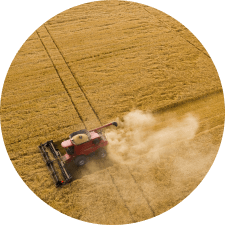
In 2023, Canadian farmers grew almost 32 million tonnes of wheat, with a high proportion rated in the top two grades.
Above-average temperatures and highly variable precipitation led to lower yields in many parts of Western Canada, resulting in a slight decrease in production. Western Canada produced a crop with below-average volumes but excellent quality and average protein content. Eastern Canada saw strong yields and production paired with good quality ratings.
| ‘000 tonnes | Durum | Wheat | Total |
| WE PRODUCED | 4,045 | 27,909 | 31,954 |
| CARRY-IN | 409 | 3,249 | 3,658 |
| DOMESTIC USE | 799 | 8,058 | 8,837 |
| EXPORTS | 3,300 | 20,000 | 23,300 |
| END STOCKS | 400 | 3,200 | 3,600 |
Source: Agriculture and Agri-Food Canada, Novermber 2023 & Statistics Canada, December 2023; Cereals Canada estimate

03
Sample Analysis
Cereals Canada worked directly with the grain exporters to obtain commercially representative samples from the 2023 Western Canadian wheat crop.
This year, Cereals Canada received over 125 samples from nine grain exporters. Each company sample represented export quality from a specific region in Western Canada for a particular wheat class (CWRS, CWAD, CPSR) and grade. These samples were used to prepare composite samples representative of this year’s crop quality that were thoroughly analyzed by Cereals Canada.
Eastern and Western prairie composites were prepared for No. 1 CWRS.
Prairie composites were prepared for No. 2 CWRS, CWAD (No. 1, No. 2) and CPSR (No. 1).
Cereals Canada staff communicated weekly with the individual exporters to gain insight on how harvest was progressing and any relevant downgrading factors that may affect the quality of the 2023 wheat crop.
This is part of Cereals Canada’s commitment to accurately represent the quality of the 2023 wheat crop from Western Canada.

04
Shipping
Canada is investing in infrastructure and supply chain improvements to meet global customer needs.
Investments in rail, terminals, and country elevator facilities, made by the Canadian grain supply chain, have increased Canada’s capacity to efficiently move grain to customers around the world. Canada is expected to export 23.3 million tonnes of wheat to over 80 countries in the 2023-24 crop year.
From Our Fields to the World’s Table
We are committed to advancing nourishment for the planet now and in the future. We value clean air, clean water, and sustainable land use, and responsible farming is at the heart of what we do. We are proud of how Canadian farmers contribute by taking care of the land, growing quality grains, and following current on-farm management practices to provide a consistent, quality grain supply for our domestic and global customers.
Where Canadian Wheat Goes
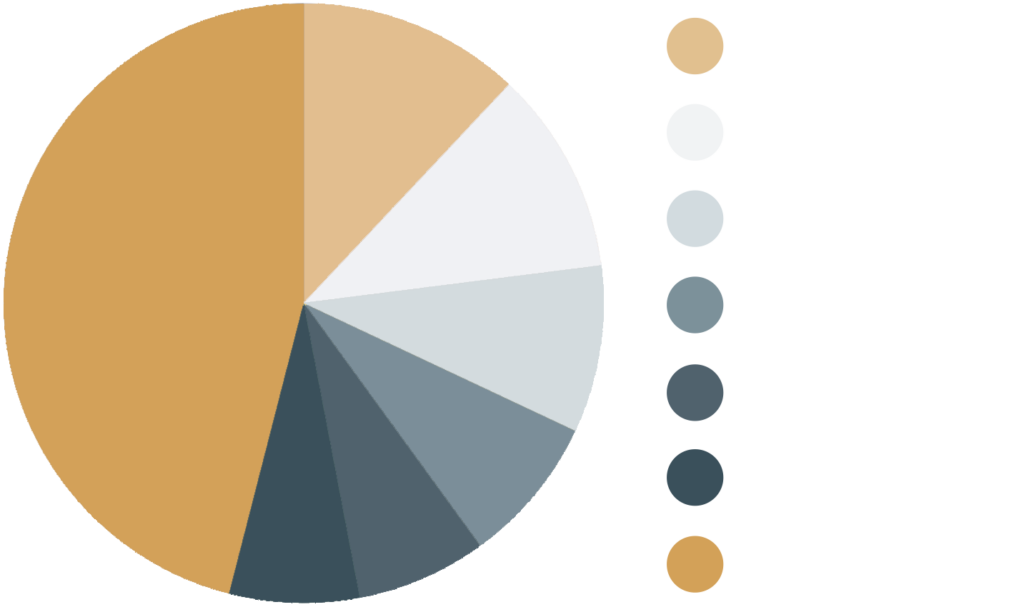
Canada Supplies the World
12%
of its wheat exports
58%
of its durum exports
Canada Feeds the World
Modern farming practices and cutting-edge innovations have enabled Canadian wheat to answer the worldwide call for a premium, sustainable product.
Brought to you by: