

Economic Impact
The Economic Impact of Cereal Grains
on the Canadian Economy
On behalf of Cereals Canada, GlobalData undertook a study to assess the impact of domestically grown common
wheat, durum wheat, barley, and oats on the Canadian economy. The study shows Canadian-grown cereals had an
estimated total impact of $68.8 billion, including more than 370,000 Canadian jobs, and $27 billion in wages.
Total Economic, Employment, and Wage Impact by Region
Click the map to see the economic impact of each province.

The geographical spread of these impacts is tied to the location of the major industries in the supply chain.
The bulk of cereal grain production takes place in the west, while much of the later-stage processing takes place in the east.
For the average of the past three years:
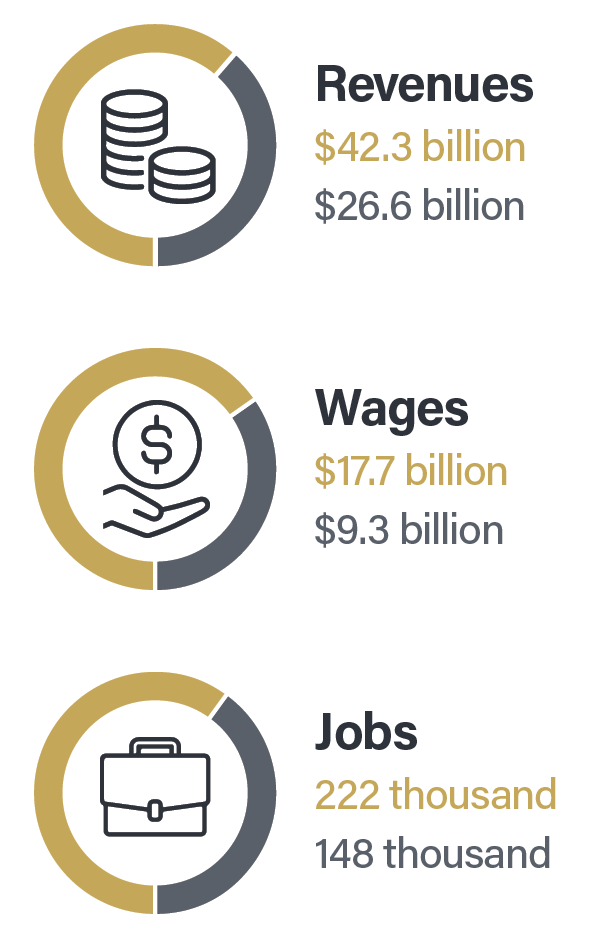
- The estimated total impact on the Canadian economy from wheat, barley, durum, and oats averaged $68.8 billion per year.
- Over 370,000 paid full time equivalent jobs are supported by the four crops, with supported family members bringing the total close to 400,000.
- The total wage impact of the four crops averaged $27.0 billion.
Direct Economic Impact of Wheat, Durum, Barley, and Oats

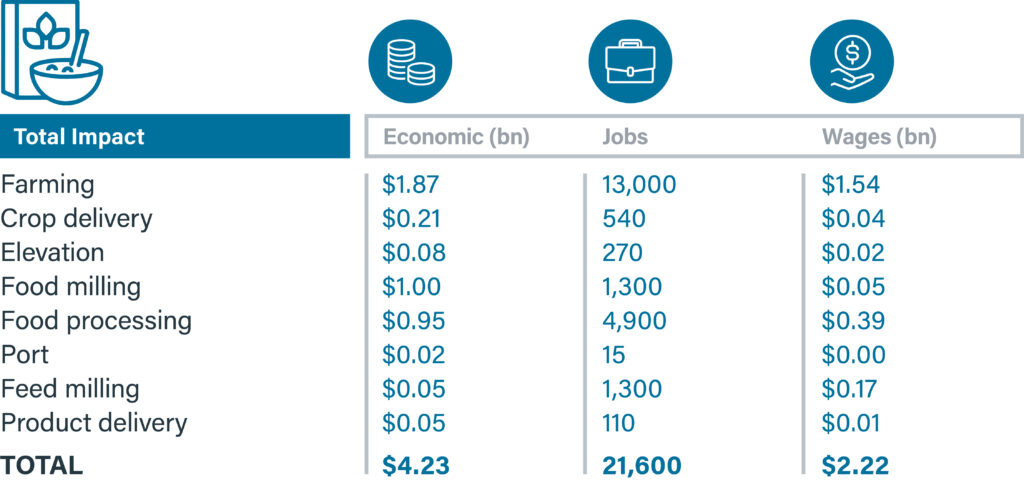
Total Economic Impact of Wheat, Durum, Barley, and Oats
In addition to the direct impacts, LMC calculated the revenues, jobs, and wages generated both through take-home spending by those whose jobs are tied to the four cereal crops, and through outsourced work undertaken by industries that support the cereal supply chain.

Download the Executive Summary for an overview of the study. To see each crop’s individual impact, download the wheat, barley, durum, and oat reports below.
Food Processing and farming are the major drivers of economic impact, with smaller effects generated by the transportation
and handling of crops and their products in facilities and ports
across Canada.
Impact by Crop
Together, these four cereals account for a large part of Canadian agriculture, and several are the foundations for important food industries such as baking and brewing.

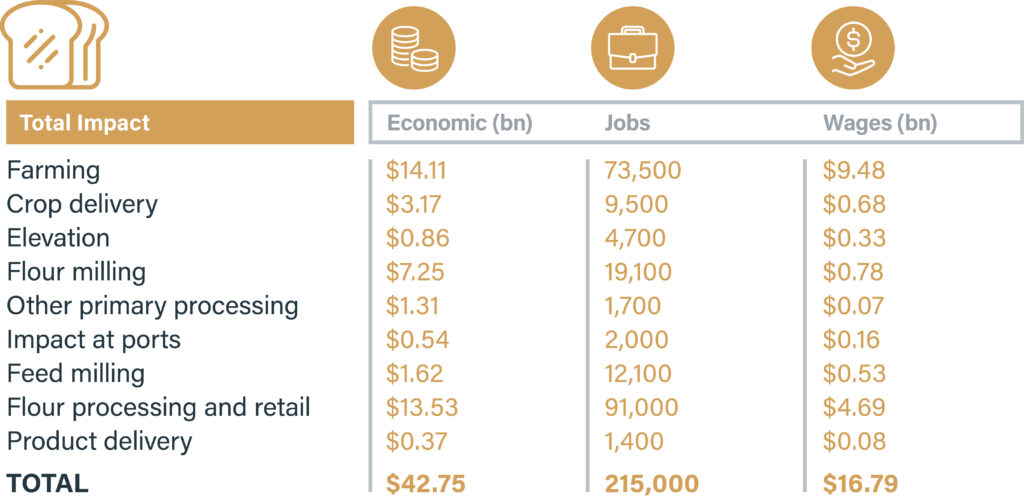
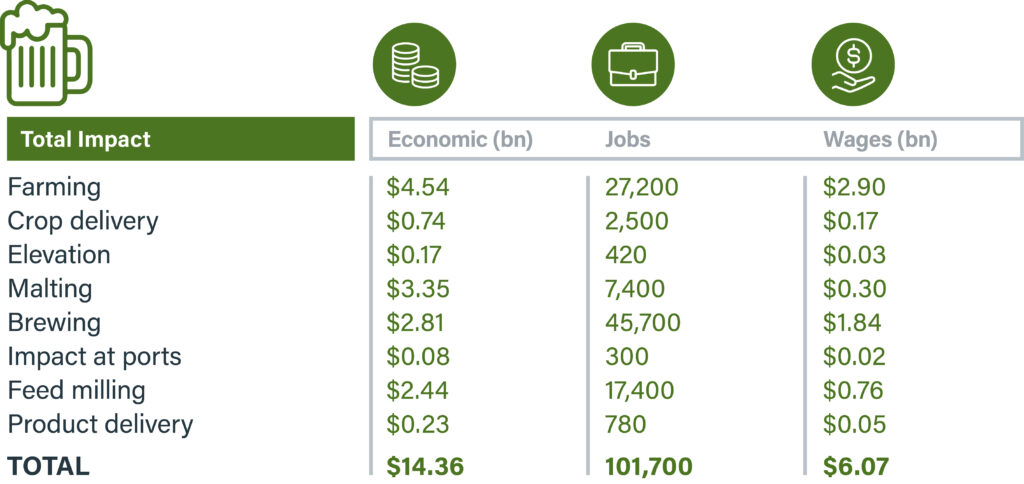
Wheat and barley account for a large share of production and acreage, and are the foundations of two major agri-food industries: baking and brewing, respectively. And, given the large number of small breweries and bakeries across Canada, these two crops generate substantial economic impact later in the supply chain.
Wheat
Wheat production (non-durum) is the foundation of the wheat value chain in Canada and, along with flour milling and processing,
accounts for the largest shares of the economic impact and employment in Canada.
Barley
The vital brewing sector is located in Eastern Canada, while Western Canada dominates the direct economic impact of Canadian-grown barley. Almost all of the crop is grown in Saskatchewan and Alberta, and the region is home to much of the country’s barley malting capacity.
Durum
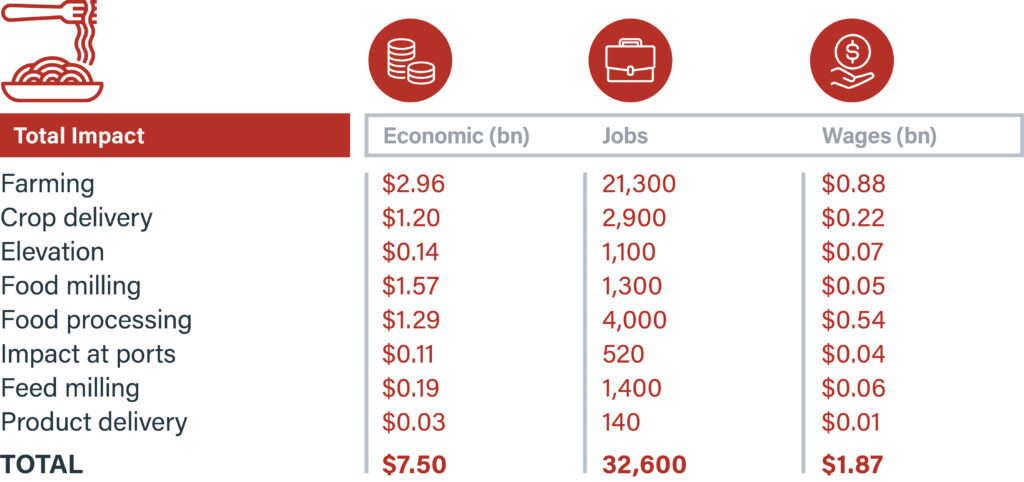
As much as 90% of the durum wheat grown in Canada is delivered to primary elevators, with the remaining being delivered directly to processors.
Oats
The rapidly growing demand for oat milk provides an opportunity for further development of the crop’s value chain in the future.
Known for consistency and quality, Canadian cereals are enjoyed here at home and exported to over 85 countries around the globe.
Webinar: Watch Now On-Demand
The Economic Impact of Cereal Grains on the Canadian Economy

This 60-minute recorded webinar provides an overview of the economic impact study, presented by the analysis team from LMC, and highlights the contributions from the different segments of the value chain. Hosted by Leif Carlson, Director of Market Intelligence and Trade Policy.