Market Access
Canadian Cereals in the Global Marketplace
Canada’s cereals sector leads the country’s agriculture exports with annual exports to over 80 countries with an estimated value of $12.1 billion CAD. The global scale and scope of our exports demonstrate the flexibility and value that Canadian cereals offer to our customers and provide valuable market diversification. Forty-nine percent of Canada’s non-durum wheat is exported to Asia.
As a national industry association, Cereals Canada plays a critical role in providing a unified voice on behalf of members to help raise the profile of key issues and influence government priority setting. In this highly complex, dynamic global marketplace, Cereals Canada leads, monitors and responds to developments in the global trade environment.
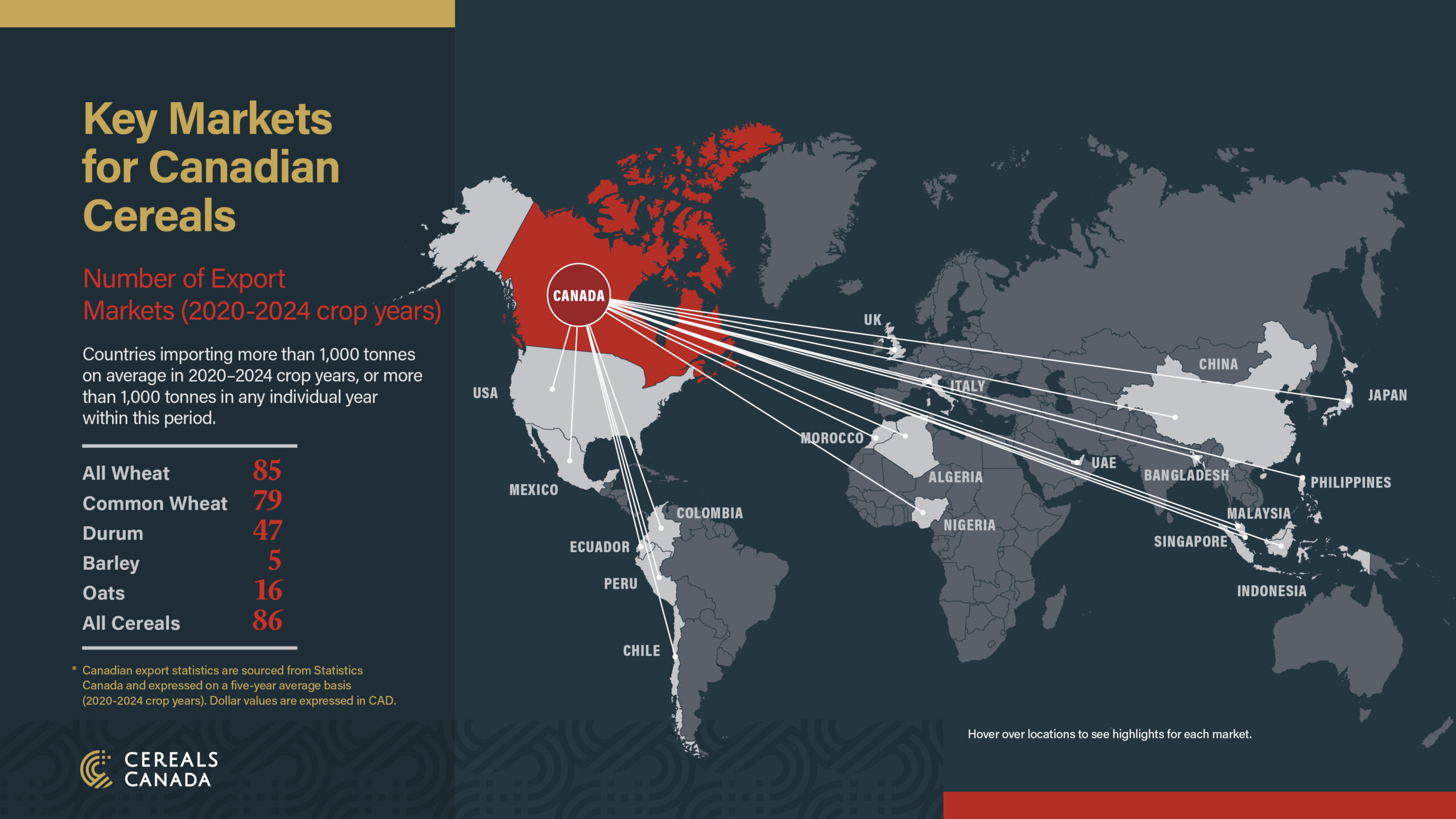
Known for producing high-quality wheat, barley, and oats, Canada is a major exporter of cereals. Hover over locations on the map below to see average Canadian exports (2020–2024) and highlights from 19 key markets for Canadian cereals.
Japan

JAPAN - Non-Durum Wheat
Average CDN Exports (2020–2024): 1.7 million tonnes, valued at $720 million
Market Profile: Japan is a consistent market for Canadian non-durum wheat. Japan primarily imports grade 1 CWRS, which is used in the production of premium baked goods.
JAPAN - Barley
Average CDN Exports (2020–2024): 242,000 tonnes, valued at $78 million
Market Profile: Japan is the third largest export market for Canadian barley. Japanese food manufacturers use barley for various applications, including miso, liquor, tea, and malt.
JAPAN - Durum Wheat
Average CDN Exports (2020–2024): 222,000 tonnes, valued at $110 million
Market Profile: Japan is the largest Asian buyer of Canadian durum wheat. The gluten strength and bright yellow colour of Canadian durum are valued by manufacturers of premium pasta products.
China

CHINA - Non-Durum Wheat
Average CDN Exports (2020–2024): 2.4 million tonnes, valued at $982 million
Market Profile: China is the largest buyer of Canadian non-durum wheat in the world, accounting for 12 percent of Canadian non-durum exports on average.
CHINA - Barley
Average CDN Exports (2020–2024): 2.2 million tonnes, valued at $803 million
Market Profile: On average, China accounts for 81 percent of Canadian barley exports. As the largest beer market in the world, China values the high quality of Canadian malting barley.
Bangladesh

BANGLADESH - Non-Durum Wheat
Average CDN Exports (2020–2024): 1.1 million tonnes, valued at $459 million
Market Profile: Demand for bakery products in Bangladesh is increasing, and Canada Western Red Spring wheat (CWRS) is considered a premium wheat for the production of baked goods. In 2024, Canadian non-durum wheat exports to Bangladesh reached their highest level in over 30 years.
Indonesia

INDONESIA - Non-Durum Wheat
Average CDN Exports (2020–2024): 2.1 million tonnes, valued at $818 million
Market Profile: Indonesia is the second largest importer of Canadian non-durum wheat, with imports reaching their highest level in over 30 years in 2024. Indonesia has an established milling industry and is home to the largest flour mill in the world.
UAE

UNITED ARAB EMIRATES - Non-Durum Wheat
Average CDN Exports (2020–2024): 202,000 tonnes, valued at $81 million
Market Profile:The United Arab Emirates is the largest buyer of Canadian non-durum wheat in the Gulf region. Demand from the bakery industry is expected to grow as bread consumption is increasing.
UK

UNITED KINGDOM - Non-Durum Wheat
Average CDN Exports (2020–2024): 495,000 tonnes, valued at $227 million
Market Profile: The United Kingdom is an established market for Canada Western Red Spring wheat (CWRS), which is valued by the bakery industry for its high protein content and gluten strength.
Italy

ITALY - Durum Wheat
Average CDN Exports (2020–2024): 927,000 tonnes, valued at $421 million
Market Profile: Italy is Canada’s largest export market for durum wheat. Pasta manufacturers value Canadian durum for its gluten strength, bright yellow colour, and excellent cooking quality for pasta.
Morocco

MOROCCO - Durum Wheat
Average CDN Exports (2020–2024): 883,000 tonnes, valued at $436 million
Market Profile: Morocco is the second largest export market for Canadian durum wheat. On average, Morocco sources about 92 percent of its durum imports from Canada.
Algeria
ALGERIA - Durum Wheat
Average CDN Exports (2020–2024): 849,000 tonnes, valued at $426 million
Market Profile: A long-standing buyer of Canadian durum wheat, Algeria accounts for 19 percent of Canada’s average durum exports.
Nigeria

NIGERIA - Non-Durum Wheat
Average CDN Exports (2020–2024): 681,000 tonnes, valued at $276 million
Market Profile: Nigeria is the largest market for Canadian non-durum wheat in Africa. Canada Western Red Spring wheat (CWRS) is considered a premium wheat for use in bread production due to its high protein content and gluten strength.
Chilie

Market Profile: Chile is the largest oat importer in South America and sources its oat imports almost exclusively from Canada.
Peru

PERU - Non-Durum Wheat
Average CDN Exports (2020–2024): 1.3 million tonnes, valued at $505 million
Market Profile: Peru is Canada’s largest market for non-durum wheat in South America and fourth largest export market globally. On average, Canada supplies 73 percent of Peru’s non-durum wheat imports.
Ecuador

ECUADOR - Non-Durum Wheat
Average CDN Exports (2020–2024): 745,000 tonnes, valued at $292 million
Market Profile: Canada is Ecuador’s main wheat supplier, exporting primarily Canada Western Red Spring (CWRS) wheat preferred by the Ecuadorian bread industry. On average, Canada holds a market share of 58 percent.
Columbia

COLOMBIA - Non-Durum Wheat
Average CDN Exports (2020–2024): 1.2 million tonnes, valued at $490 million
Market Profile: Canada is the leading supplier of non-durum wheat to Colombia. Colombia’s established bread industry drives the demand for high-protein CWRS wheat.
Mexico
MEXICO - Non-Durum Wheat
Average CDN Exports (2020–2024): 676,000 tonnes, valued at $258 million
Market Profile: Mexico is an established and diversified market for Canadian non-durum wheat. It is the largest international buyer of Canadian Eastern (CE) wheat.
MEXICO - Oats
Average CDN Exports (2018–2022): 112,000 tonnes, valued at $38 million
Market Profile: Mexico is the second largest export market for Canadian oats. In 2024, Canadian oat exports to Mexico reached their highest level in over 30 years.
USA

Average CDN Exports (2020–2024): 1.3 million tonnes, valued at $542 million
Market Profile: On average, the United States sources 90 percent of its non-durum wheat imports from Canada. The United States purchases Canadian red spring wheat, winter wheat, and soft white spring wheat, which are used in the production of a wide variety of baked goods.
UNITED STATES OF AMERICA - Durum Wheat
Average CDN Exports (2020–2024): 530,000 tonnes, valued at $260 million
Market Profile: Canada supplies 99 percent of the durum wheat imported by the United States. Canadian durum is used alongside domestically grown durum for pasta production.
UNITED STATES OF AMERICA - Oats
Average CDN Exports (2020–2024): 1.3 million tonnes, valued at $510 million
Market Profile: The United States accounts for 81 percent of Canada’s total oat exports. The food manufacturing industry processes Canadian oats into oat milk, breakfast cereals, and cereal bars.
UNITED STATES OF AMERICA - Barley
Average CDN Exports (2020–2024): 255,000 tonnes, valued at $122 million
Market Profile: Canadian barley represents 88 percent of the barley imported by the United States. It is highly valued for both malting and animal feed applications.
Malaysia
Average CDN Exports (2020–2024): 231,000 tonnes, valued at $102 million
Market Profile: Malaysia is a key regional food processing hub and a growing exporter of wheat-based end products. Canada Western Red Spring wheat (CWRS) is used in the production of baked goods and wonton noodles.
Singapore
Average CDN Exports (2020–2024): 30,000 tonnes, valued at $13 million
Market Profile: Singapore is a key trading hub for the Indo-Pacific region and is home to the head offices of regional milling companies. Imports of Canadian non-durum wheat have increased over the last five years.
Philippines

Average CDN Exports (2020–2024): 298,000 tonnes, valued at $131 million
Market Profile: The Philippines is a unique market in the Southeast Asian region because of its high bread consumption. Canada exports primarily high-protein Canada Western Spring Wheat (CWRS) to the Philippines, which is highly valued for bread production.
From Our Fields to the World’s Table
Canada’s cereals sector is a $68.9 billion industry that supports over 370,000 jobs across Canada. Currently Canada is on track to be the third largest wheat exporter and #1 exporter of high quality, high-protein wheat, with over 28.5 million tonnes of wheat expected to reach over 80 international markets in 2025-2026.
Where Canadian Wheat Goes
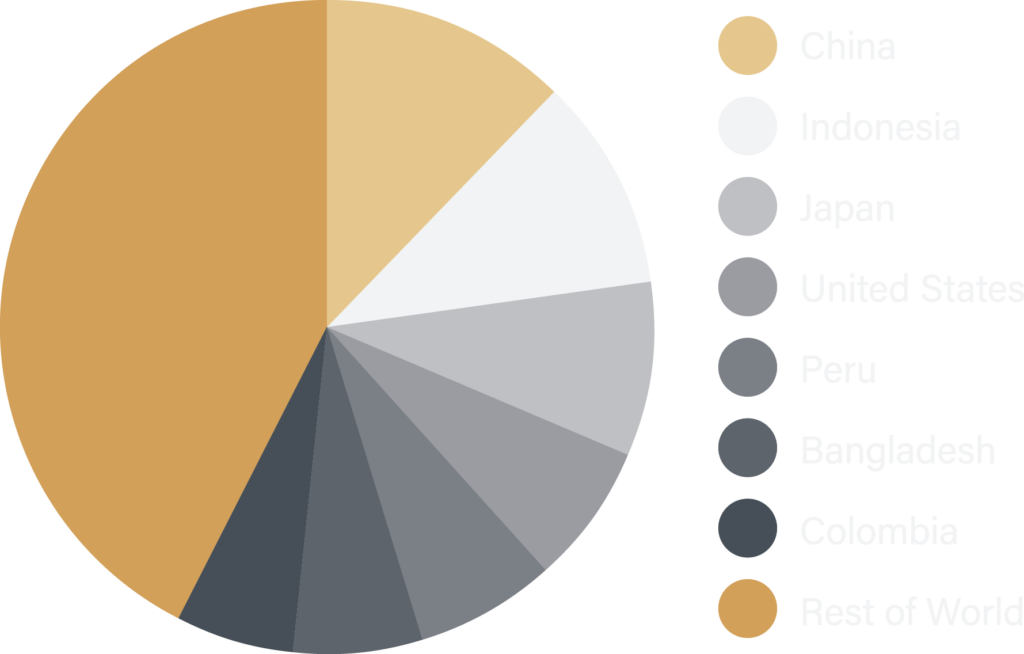
*Non-durum wheat, 2021-2025 average, in metric tonnes (Statistics Canada)
Canada Supplies the World
12%
of global exports of all wheat
54%
of global exports of durum wheat
*Five-year averages (2021-2025)
Cereals Canada Market Access Strategy
We recognize that in an unpredictable trade environment, Canada’s cereals sector must have the tools and relationships in place to react quickly to changes in market conditions. Our market access strategy supports policies and approaches to minimize trade disruptions and maximize trade opportunities.
Trade Policy

Fostering a transparent and predictable rules-based trading system and responding to technical trade issues or opportunities.
Science-Based Policy

Encouraging science-based regulatory and business decisions that enable innovation while minimizing potential market risks.
Trade Advocacy

Strengthening export-led growth by leading advocacy for strategic trade priorities with domestic and global partners
Foresight & Analysis

Monitoring the changing trade and market environment to guide responses in the areas
of market access, market development and market support.
Leading Market Access, Trade Advocacy, and Policy for Canadian Cereals
Cereals Canada focuses on protecting and expanding Canadian market access for Canadian cereals, with proactive trade advocacy activities that work alongside our market development and market support services. We work closely with growers, regulators, customers, and our supply chain partners to ensure that Canada’s safe, high-quality grain exports align with international and domestic standards such that our products have access to global markets.
As directed by our members, Cereals Canada represents our sector in matters of international trade policy and market access. Through engagement and joint action with our domestic and international stakeholders, we monitor, identify and work to resolve market access barriers for Canadian crops. This work highlights the effectiveness of the Canadian quality control system in providing valuable, reliable grain with consistent quality to our customers.
Key Programs and Initiatives
Managing Technical Trade Barriers/Issues
The unexpected and sudden implementation of tariff and non-tariff barriers can cause immediate and costly disruptions to Canada’s market access. Cereals Canada takes a leadership role in working with the Canadian government and international industry stakeholders to represent the interests of the Canadian industry on the enforcement of trade agreements, sanitary and phytosanitary issues, and technical barriers to trade.
Promoting Export-led Growth
Cereals Canada is a leading advocate for Canada’s free trade objective and has actively promoted the sector’s interests in multilateral and bilateral trade agreements. In recent years, our advocacy has supported the advancement of agreements such as the Canada United States Mexico Agreement (CUSMA), the Comprehensive and Progressive Agreement for Trans-Pacific Partnership (CPTPP) and the Canada-European Union Comprehensive Economic Trade Agreement (CETA). Cereals Canada supports Canada’s ongoing and forthcoming negotiations with the UK, India, Indonesia and the Association of Southeast Asian Nations (ASEAN).
Monitoring Market Risks
Cereals Canada works closely with our growers, regulators and those within the supply chain to ensure that Canada’s grain exports meet our commitment to consistently deliver safe, high-quality product to meet international and domestic standards.
Timely investigation and communication of MRL changes supports a proactive approach to help safeguard Canada’s reputation for high-quality, safe grain exports. To ensure that we meet our commitments to our members, we consistently communicate issues concerning maximum residue limits (MRL) changes, sustainability requirements and sanitary and phytosanitary issues/concerns to exporter members and grower groups.
Cereals Canada Maximum Residue Limits Assessment Committee
Cereals Canada monitors global regulatory changes related to MRL for crop protection products or contaminants and advises cereals grain value chain members to ensure awareness and proactive responses that strengthen Canada’s quality reputation and brand.
Cereals Canada conducts annual assessments on crop protection products and crop use patterns with a new or amended registration to evaluate the risk of a trade disruption through the MRL Assessment Committee (MAC).
The cereals MAC is comprised of members of the cereals value chain and was created as part of the implementation of the Canada Grains Council Market Acceptance of Pesticide Use Policy. The policy strives to provide an appropriate balance between enabling the commercialization of innovative and new chemistry/crop use pattern products while ensuring that Canadian crops are market ready.
Indo-Pacific Diversification Office
The Indo-Pacific region represents a significant opportunity for Canada to diversify its agricultural exports while positively impacting global food security. On behalf of its members, Cereals Canada actively advocated for the of an Indo-Pacific Agriculture and Agri-Food Office (IPAAO) to further strengthen agricultural ties with the Indo-Pacific region.
In 2024, the IPAAO was opened in Manila, Philippines. The office demonstrates Canada’s commitment to the Indo-Pacific region, positions Canada as a trusted knowledge partner, and will help provide the resources and expertise needed to give Canadian farmers and agri-businesses a competitive advantage and diversify our agricultural exports across the region.
Keep it Clean
Keep it Clean is a joint initiative of Cereals Canada, the Canola Council of Canada, Pulse Canada and the Prairie Oat Growers Association, providing growers and crop advisers with resources for growing market-ready crops. This includes providing timely updates on potential market risks and resources for on-farm practices to ensure crops meet the standards of domestic and export customers.
Throughout the year, growers are provided with timely updates on potential market risks or restrictions, including MRLs, and information about on-farm practices that will ensure their canola, cereals, and pulse crops meet the standards of our export customers.