
New Crop Events
The New Wheat Crop Report provides functionality and quality updates about the crop year to key markets. Cereals Canada, along with the Canadian Grain Commission, farmers, and the cereals value chain, share information about the quality and consistency of the current years’ wheat crop with domestic and global customers in a series of webinars and in-country sessions. During 2025 New Crop outreach, Cereals Canada engaged with twenty-nine countries that purchased $8.2 billion of Canadian wheat in 2024.
2025 New Wheat Crop Webinars – Watch Now
Join Cereals Canada experts, along with the value chain and the Canadian Grain Commission, to learn about this year’s wheat production and technical analysis of quality and functionality—everything you need to know about Canada’s new crop. This year, two webinars focusing on the results from the 2025 harvest were presented.
2025 New Wheat Crop Report Webinar for Customers in Asia and the Middle East
Recorded November 18, 2025
This 2.5-hour webinar includes a technical analysis of the quality and functionality of CWRS, CWAD, and wheat, by Specification, including protein levels, grading factors, milling performance, and functionality—everything you need to know to get the most out of this year’s wheat. Available in English and English with Mandarin, Japanese, Korean, and French interpretation.
2025 New Wheat Crop Report Webinar for Customers in Europe and the Americas
Recorded November 19, 2025
This 2.5-hour webinar includes a technical analysis of the quality and functionality of CWRS, CWAD, CESRW, and wheat, by Specification, including protein levels, grading factors, milling performance, and functionality—everything you need to know to get the most out of this year’s wheat. Available in English and English with French, Spanish, and Italian interpretation.
Learn about this year’s wheat crop and download the crop summaries for each class at:
New Wheat Crop Webinars – On Demand
2024 New Wheat Crop Report Webinar for Customers in Asia and the Middle East
Provides an overview of grain farming in Canada, market outlook, quality assessment, and milling and functionality of Canadian wheat. Data for CWRS, CWAD, and CPSR is included, and recordings are available in English, Mandarin, Japanese, and French.
2024 New Wheat Crop Report Webinar for Customers in the Americas and Europe
Provides an overview of grain farming in Canada, market outlook, quality assessment, and milling and functionality of Canadian wheat. Data for CWRS, CWAD, CPSR, and CESRW is included, and recordings are available in English, French, Spanish, and Italian.
2023 New Wheat Crop Report Webinar for Customers in Asia and the Middle East
Provides an overview of grain farming in Canada, market outlook, quality assessment, and milling and functionality of Canadian wheat. Data is included for CWRS (incl. 60% ext.) and CWAD. Recordings are available in English, Mandarin, Japanese, and French.
2023 New Wheat Crop Report Webinar for Customers in the Americas and Europe
Provides an overview of grain farming in Canada, market outlook, quality assessment, and milling and functionality of Canadian wheat. Data is included for CWRS (no 60%), CWAD, CPSR, and CESRW. Recordings are available in English, French, Spanish, and Italian.
2022 New Wheat Crop Report Webinar for Customers in Asia and the Middle East
Provides an overview of grain farming in Canada, market outlook, quality assessment, and milling and functionality of Canadian wheat. This webinar includes overviews of CWRS, CWAD, CPSR and CESRW, and is available in English, French, Spanish, and Italian.
2022 New Wheat Crop Report Webinar for Customers in the Americas and Europe
Provides an overview of grain farming in Canada, market outlook, quality assessment, and milling and functionality of Canadian wheat. This webinar includes overviews of CWRS and CWAD, and is available in Chinese, Japanese, English, and French.
Our Process from Harvest to Webinar
Total Time Approx. 7-8 Months

01
Harvesting
Up to 3 Months
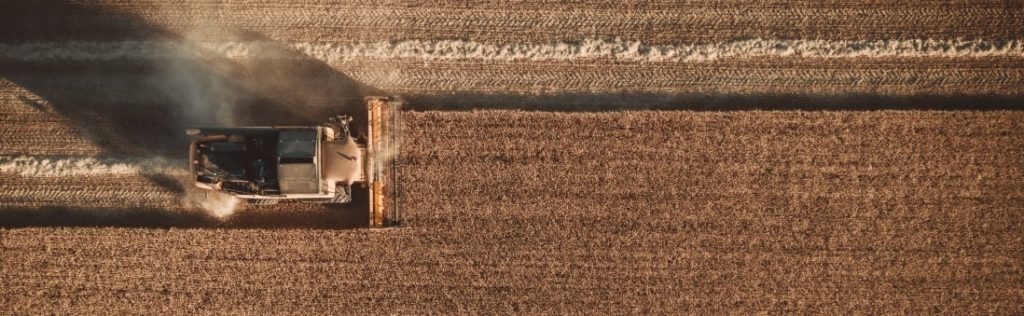
This is the final stage in the production process. Harvested crops are stored either on the farm in grain bins or delivered to grain elevators for shipment.
Harvesting time differs by province and region. More northern areas tend to be harvested later than more southern regions.

02
Sample Collection
2-3 Months
Cereals Canada works closely with nine grain companies with grain elevators across Western Canada (Manitoba, Saskatchewan, Alberta, and a small portion of British Columbia) to access wheat samples representative of export quality.
Grain companies receive wheat samples when growers deliver grain for shipment, or when they submit a representative wheat sample for grading. Grain companies are asked to submit their composites to Cereals Canada when samples represent at least 75 per cent of the harvested wheat class/grade in the region.
Classes of wheat analyzed: CWRS, CWAD & CPSR.

03
Grading and Blending
2-3 Weeks
Samples from all grain companies are graded, then blended into composites that represent production from the West, East or Prairie regions of Western Canada. East and West regions are only for No. 1 CWRS, while Prairie regions are for CWAD, CPSR and No. 2 CWRS.

04
Milling
Up to 10 Days
Each composite sample is thoroughly blended and a wheat sample is taken for wheat analysis. The remaining wheat is milled and the resulting flour and/or semolina is analyzed and tested in appropriate end-products (bread, noodles, pasta). Key milling characteristics include flour yield and ash content.

05
Flour/Semolina Analysis
7-10 Days
Flour/semolina is analyzed to determine its quality. Key areas of assessment for flour/semolina include protein content, gluten strength/rheological properties (protein quality) and colour.
While most quality analysis is done rather quickly, rheological and colour assessments are conducted 7 days after milling. Using a standard number of days after milling provides a basis for fairer comparisons.

06
End-product Functionality
2-3 Days
Key characteristics of end-product quality for bread includes loaf volume, crumb structure and colour. For noodles, we look at colour and colour retention, as well as cooked texture. For pasta, we consider the colour of the dried product and cooking quality (texture, cooking loss, etc.). The process includes preparation of scaling ingredients, actual processing and end-product quality assessment/scoring.