
Canadian Wheat
Quality You Can See and Taste
Canadian wheat is known around the world for its exceptional quality, consistency, and reliability. Highly valued for its high protein content, milling performance, and ability to produce great tasting foods—from breads and noodles to pastries and breakfast cereals—Canadian wheat is a top choice for millers and food manufacturers in more than 80 countries.
Canadian wheat is known around the world for producing delicious, high quality bread, and it comes down to the grain itself. Canadian Western Red Spring (CWRS) wheat naturally has a higher protein content than many other wheats. That protein forms strong, elastic gluten, giving bread the structure it needs to rise tall and stay soft and chewy inside. The Canadian prairie climate helps too, providing long summer days and cool nights which allow the grain to mature slowly and produce consistently high quality kernels that mill into reliable, high performing flour every time.
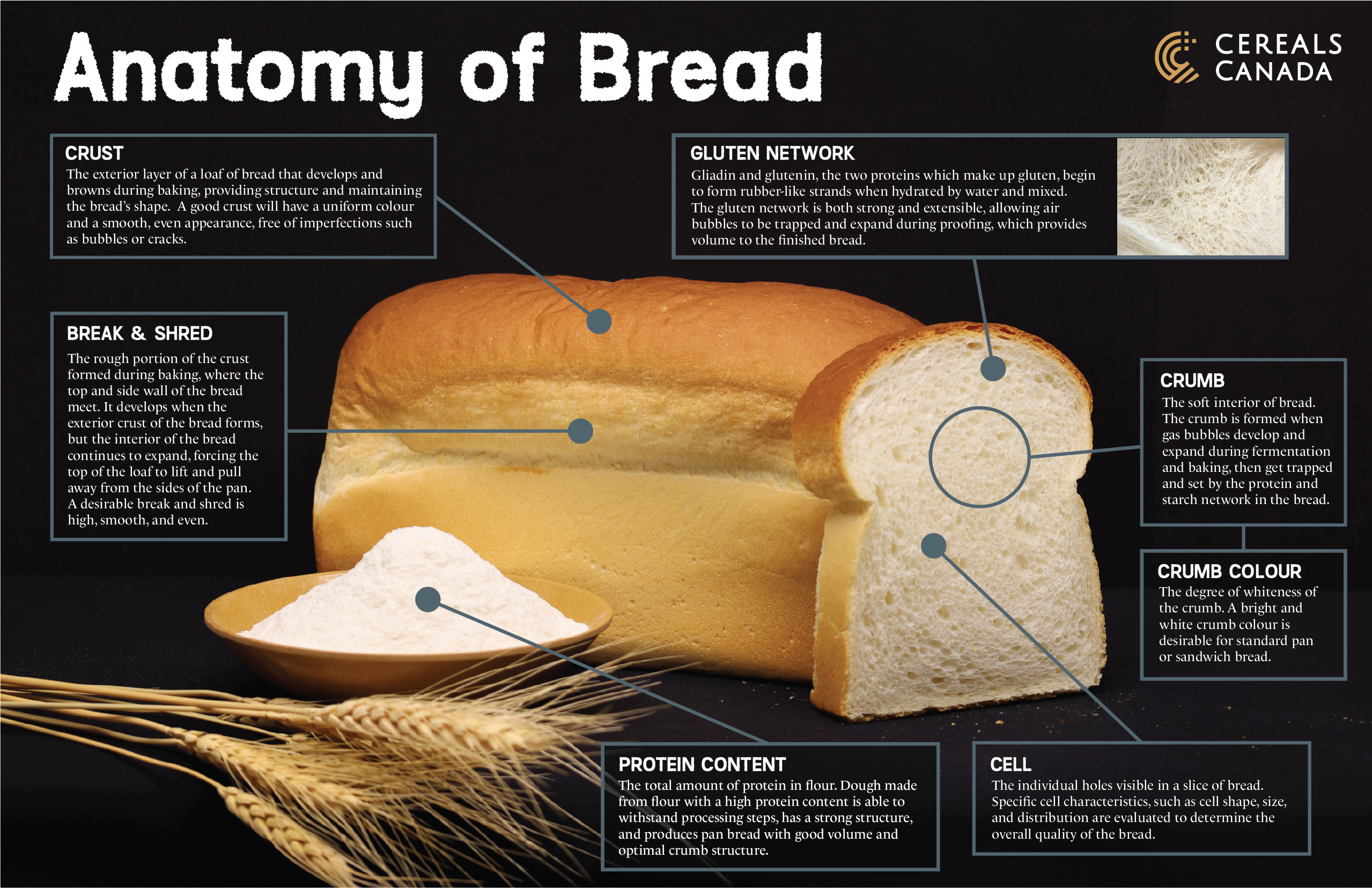
When you slice into a loaf made with Canadian wheat, you can actually see the difference. A strong protein structure supports a beautiful rise, an even crumb, and well formed cells—the tiny holes inside each slice that give bread its airy texture. The result is bread that looks great, tastes great, and performs consistently whether you’re baking at home or in a commercial bakery.
The “Anatomy of Bread” graphic below highlights these features so you can see how the quality of Canada’s wheat translates into a truly exceptional loaf, from crust to crumb.
Canada produces significantly more wheat than it consumes domestically and is on track to be the third largest wheat exporter and number one exporter of high quality, high-protein wheat. An impressive 28.6 million tonnes of Canadian wheat is expected to reach over 80 international markets in 2025-2026.
Wheat: A Staple Food Around the World
Wheat is a staple food for 35% of the world’s population and provides more calories and protein than any other crop. Canadian wheat is highly valued for its high protein content, consistency, and quality here at home and in over 80 countries around the globe. Here at home, approximately 93% of Canadians consume wheat foods weekly.
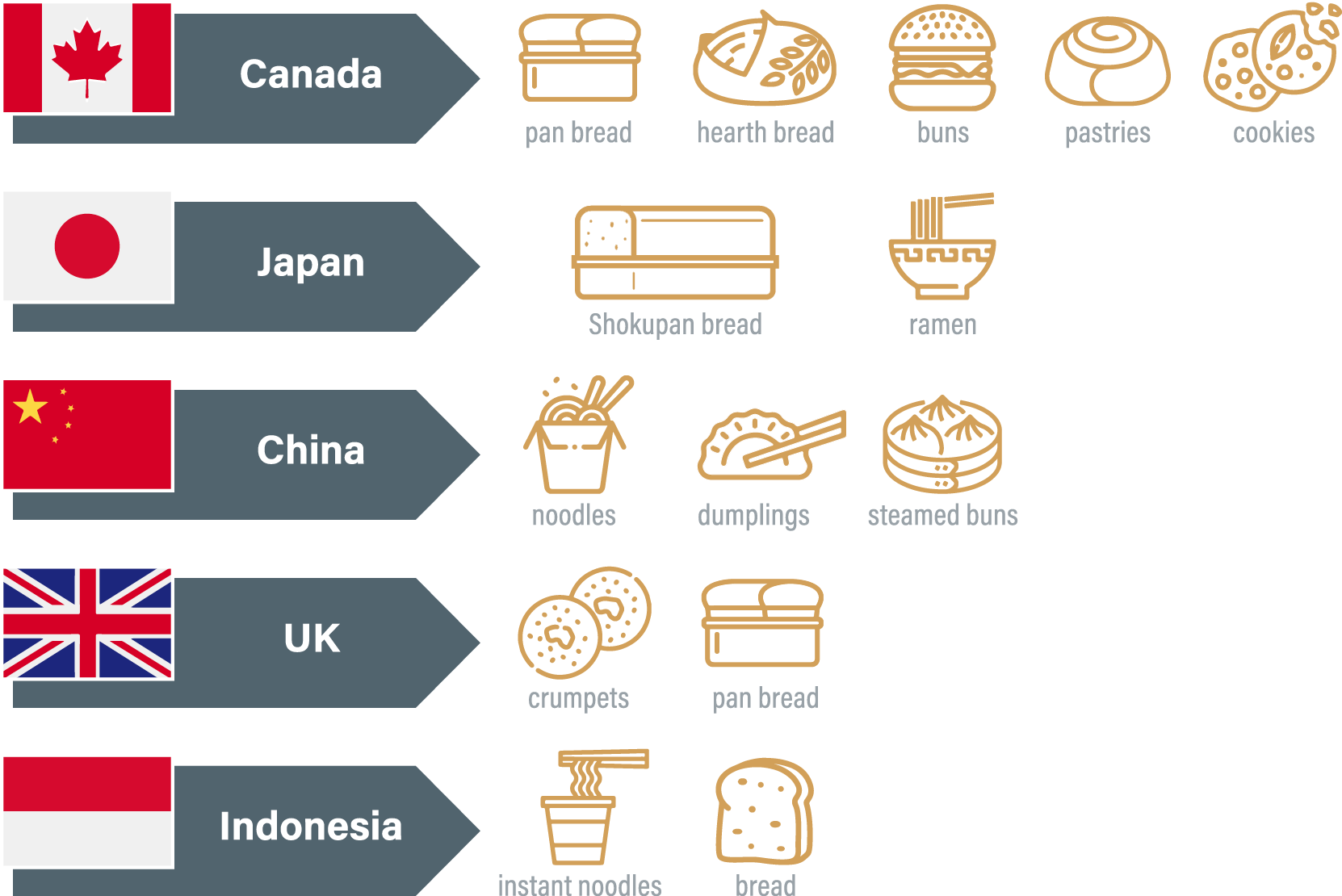
The versatility of Canadian wheat and need for high quality drives demand across diverse markets. These are just a few of the foods made with Canadian wheat that you’ll find around the world:
Canadians Love Canadian Wheat
Canada continues to strengthen its reputation as a global leader in high quality wheat production—and that leadership begins at home. While Canadian wheat is recognized worldwide, domestic millers remain the largest purchasers of Canadian wheat. This means most of the flour used by Canadians is both grown and milled here at home.
Canada’s diverse range of wheat classes allows millers and end-users to meet the needs of a wide variety of products. Hard wheats offer the higher protein and stronger gluten required for bread and other yeast leavened goods, while soft wheats provide the lower protein levels ideal for tender cakes, cookies, and pastries. This diversity is a key contributor to the versatility and reliability of Canadian flour.
Thanks to the combined efforts of Canadian farmers and millers, Canada has built a strong international reputation for quality, consistency, and trust, while Canadians themselves remain among the strongest supporters of their own grain sector. It’s something for all Canadians to be proud of!
What About Wheat Nutrition?

What About Wheat? is Canada’s trusted source for science-based information about wheat nutrition, making it simple to understand how wheat foods—from pasta and roti to tortillas, noodles, and bread—fit into a healthy diet. What About Wheat? is also where nutrition professionals and the public can discover Canada’s wheat story and the journey it takes to get from farm to plate.
Visit What About Wheat? for the latest evidence and peer-reviewed research on key areas of wheat and health, including diabetes, heart and gut health, fibre, gluten, enrichment and fortification, and whole grains.
Canadian farmers have responded to demands for sustainable food production by adopting technologies and conservation management practices that have reduced the environmental impact of Canadian wheat production.
Get to Know Canadian Wheat
There are 10 wheat classes grown in Western Canada and seven wheat classes grown in Eastern Canada, each with different qualities and characteristics. The three main classes of non-durum wheat grown in Canada are Canada Western Red Spring (CWRS), Canada Prairie Spring Red (CPSR), and Canada Eastern Red Soft Winter (CESRW).

Canada Western Red Spring
CWRS is Canada’s most widely grown wheat class. A hard wheat with high protein content, well-balanced gluten strength, and superior milling and baking quality, CWRS is ideal for high-volume pan bread as well as for hearth bread and flat bread, noodles and Asian product applications.

Canada Prairie Spring Red
CPSR is a medium protein content wheat, offering very good quality with medium kernel hardness and excellent flour yields. CPSR is ideal for pan bread, hearth bread, flat bread, crackers, instant noodles, and white salted noodles.

Canada Eastern Soft Red Winter
CESRW is grown largely in Ontario with additional production in Quebec and the Atlantic provinces. This soft winter wheat offers very good quality and low protein content ideally suited for cookies, cakes, pastry, cereal, crackers, biscuits, and fillings.
Looking for information on Canadian durum wheat? Visit: Choose Canadian Durum
Canada Grows Quality
Canadian farmers work hard to grow safe, high quality ingredients you can trust. They use the latest science and research to guide their farming practices, helping them produce the best possible crops year after year. By continually investing in innovation, farmers help maintain Canada’s strong reputation for quality. The grains they grow play an important role in supporting our food security, food safety, and the nutritious foods we enjoy every day.
Spring Wheat vs Winter Wheat
Have you ever wondered what the difference is between spring wheat and winter wheat?
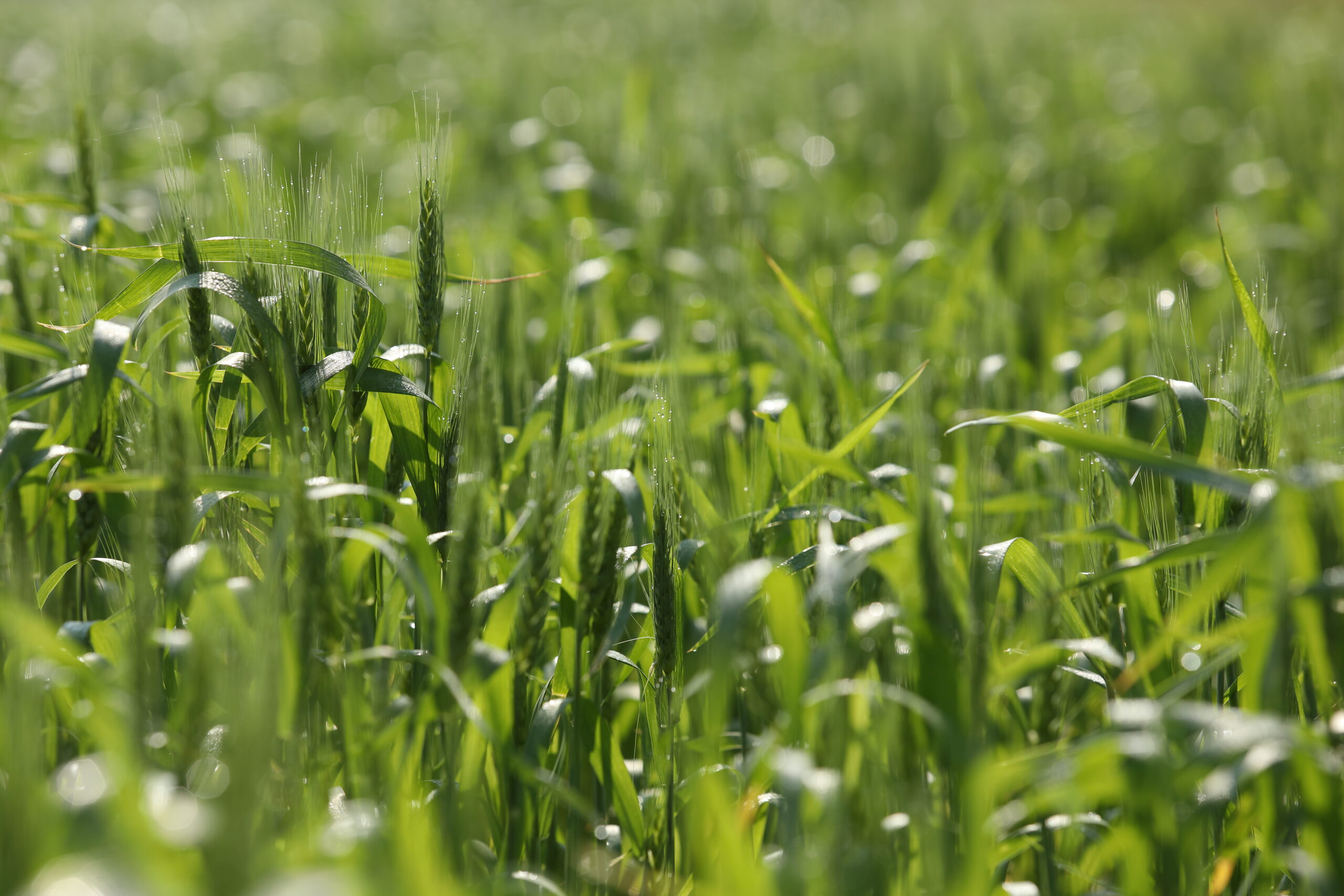
Spring wheat is planted in the spring, growing quickly through the summer. It is harvested in the late summer or early fall.
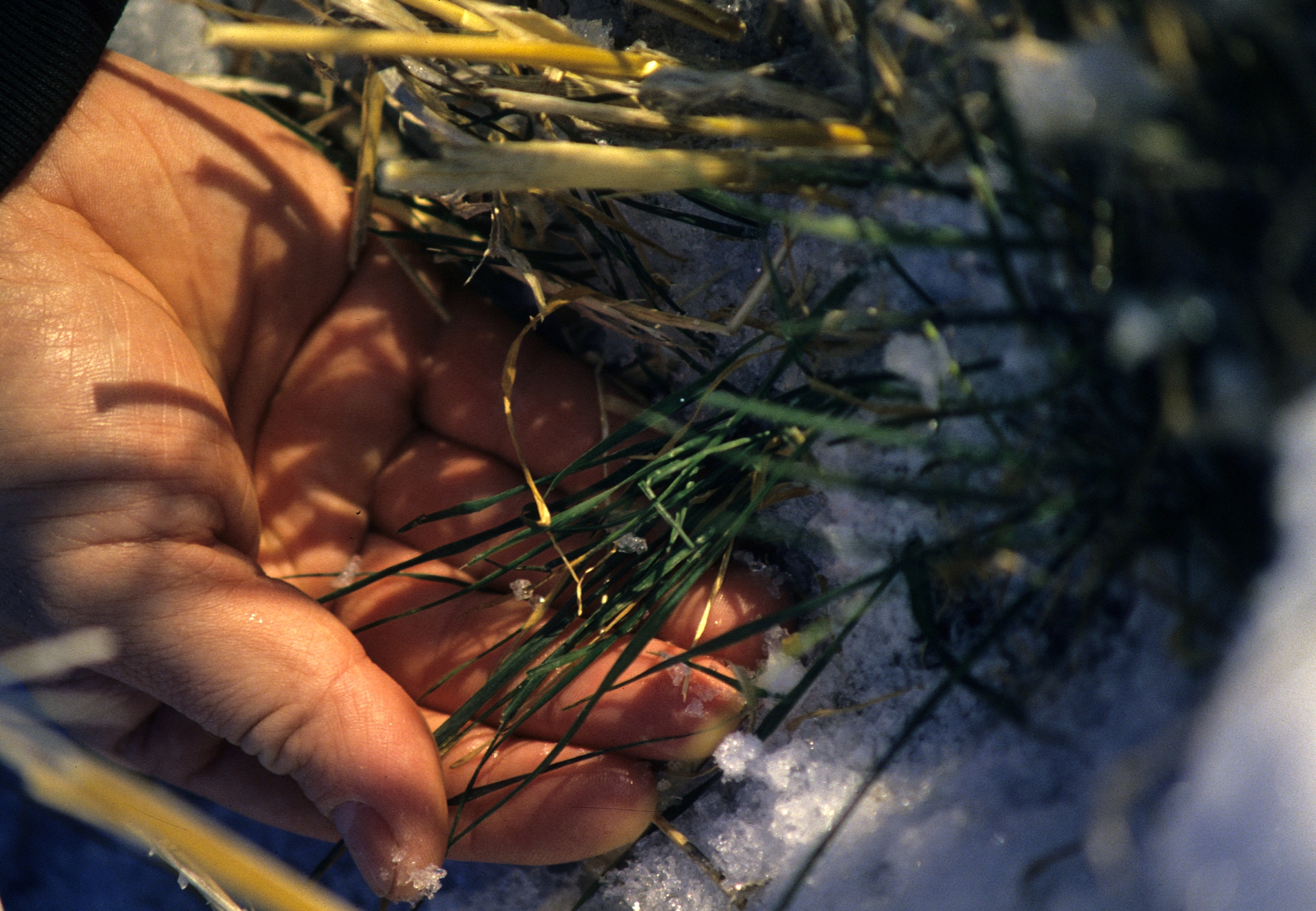
Winter wheat is sown in the fall because it requires a cold period to set seed. It survives the winter through dormancy, begins growing again in the spring, and is harvested the following summer.

Did you know? Western Canadian winter wheat is a sustainable crop that supports biodiversity and protects nesting habitat for ducks and other birds. In fact, studies have shown that ducks nesting in winter wheat are 24% more successful than those nesting in spring-planted cereals.
The Habitat-Friendly Winter Wheat Ecolabel is a program backed by farmers and farm partners that allows consumers to identify food and drink products containing at least 30% Western Canadian winter wheat.
Canada’s strong reputation comes from its careful grain handling system and decades of investment in farming and milling excellence, ensuring consumers enjoy safe, clean, and nutritious wheat ingredients in their everyday foods.
A History of Innovation
Wheat has come a long way in Canada, beginning with early varieties like Red Fife and Marquis. Today’s wheat relies on advanced genetics and technology to produce wheat that is high-yielding, disease-resistant, and perfectly suited to Canada’s short growing season. These improvements have also helped make Canadian flour a preferred choice for baking and noodles, keeping Canada a top wheat exporter worldwide.

- Approx. 1605: First wheat planted in Canada at Port Royal, Nova Scotia.
- 1617: Louis Hebert plants wheat in Quebec City
- 1812: Selkirk settlers plant wheat in Manitoba
- 1842: David Fife introduces Red Fife, a wheat variety that adapted well to Canadian conditions. By the 1860s, Red Fife is grown across Canada, setting the standard for Canadian wheat. By 1910, Red Fife wheat accounts for 56 per cent of all crops grown in Canada.
- 1892: Charles Saunders develops Marquis wheat, a cross between Red Fife and Hard Red Calcutta.
- 1907 Marquis is trialled, showing an earlier maturity and higher yield than Red Fife. It is released two years later, and by 1918 it is grown on over 20 million acres, significantly impacting Canada’s status as a major wheat exporter. Marquis becomes Canada’s dominant wheat variety for decades due to its excellent yield and baking quality.
- 1972: The Canadian International Grains Institute (Cigi) opens in downtown Winnipeg, providing technical support, market development, and quality assessments for Canadian wheat.
- 1994: A variety of Canada Western Red Spring (CWRS) wheat called AC Barrie is registered and released. It becomes the top CWRS variety from 1998–2007, providing consistently high yield, high protein potential, and good sprouting resistance.
- 2020: Cigi merges with Cereals Canada, an organization focused on advocacy, market access, government engagement, and trade relationships. Together under the banner of Cereals Canada, our organization represents the cereals grain sector and works with Canada’s domestic and global customers to create a point of differentiation that supports and drives market demand, ensuring that Canadian quality is translated into value.
- Today: CWRS is highly sought after around the world for high-volume pan breads and noodle production. It represents about 60 per cent of the wheat acres grown across Canada, and new, improved varieties are registered and released each year.

Wheat Breeding and Research in Canada
Wheat breeders and researchers are constantly developing new varieties that work well in Canada’s relatively short growing season and improve upon yield, protein content, and time-to-maturity,as well as disease, pest, and drought resistance. The University of Saskatchewan estimates that around one quarter of the increase in commercial yields over the 50-year period from 1970 to 2019, is attributed to wheat varietal development.
Canada has a long history of wheat research, from the development of early-maturing wheat varieties like Marquis to current efforts in developing new breeds and protecting crops from disease. New cultivars developed through breeding programs are crucial for maintaining and growing Canada’s position as a global wheat exporter. Innovation also supports a strong domestic wheat market by providing farmers with varieties that meet the needs of Canadian millers and bakers.
The National Wheat Research Priorities were created to guide research in the Canadian wheat industry for five years (2023–2028) through a shared set of goals that recognize regional differences.
Quality Assurance
Canadian wheat quality assurance relies on the Canada Grain Act, implemented by the Canadian Grain Commission (CGC), which uses a comprehensive system of grading, inspection, and research to ensure consistency and meet international standards. Key elements include a national grain grading system, standardized sampling and testing procedures to assess quality and safety, and research to understand and improve grain characteristics. The CGC’s Harvest Sample Program gathers and analyzes samples to monitor quality and inform the sector, supporting Canada’s reputation as a reliable supplier of high-quality wheat.
Expertise in Canadian Wheat
For over 50 years, Cereals Canada has been testing and assessing the quality and functionality of Canadian wheat through its Harvest Assessment Program. Each year, the Cereals Canada team works with exporters to obtain representative samples from several wheat classes grown in Western Canada. The samples are evaluated for milling performance, flour/semolina quality, and end-product functionality. Depending on the class of wheat, bread, pasta, noodles, and/or cookies are produced in the technical labs at Cereals Canada and thoroughly assessed by the team.
The results of these evaluations are used to create Canada’s New Wheat Crop Report, which is presented to global customers and members of the Canadian cereals value chain at the end of each year. The New Wheat Crop Report is important to customers as it tells them what to expect from the current crop year’s wheat.
The consistent quality of Canadian wheat, backed by world-class customer support provided by Cereals Canada, ensures global customers receive the premium product they expect, while providing farmers with access to key export markets.
Economic Impact
Non-durum wheat production is the foundation of the wheat value chain in Canada and, along with flour milling and processing, accounts for the largest shares of the economic impact and employment in Canada. The Canadian non-durum wheat sector has an estimated $42.7 billion total economic impact on the Canadian economy annually. Learn more: Economic Impact of Cereal Grains on the Canadian Economy
